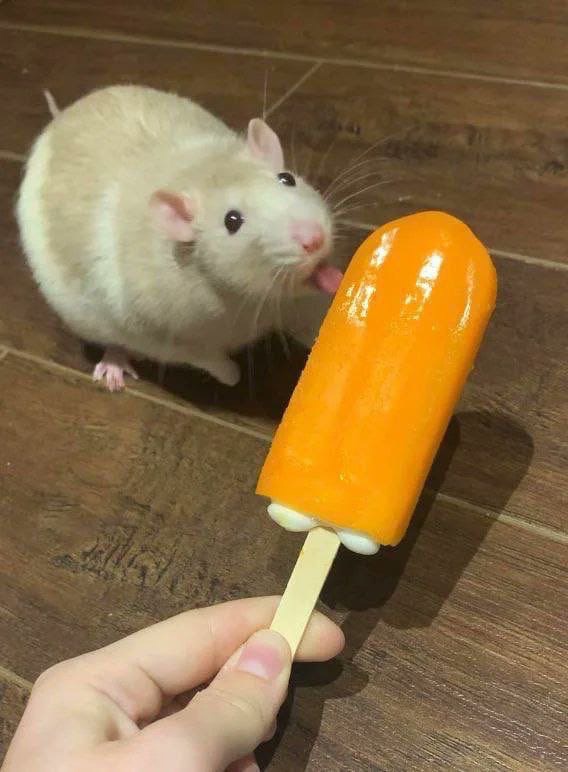
>>5132003>Can you post links to anything you've got for good treats?Not really honestly, most of my research so far has been on toxicity. But i'd say anything high in protein that isnt too fatty is going to be a favorite for them, like chicken and eggs
There's some inaccuracies i've already found with the link in the OP. It lists yogurt as a good food, but the lactose in it is one of the few things humans can eat that rats can't. rats past weening age almost entirely lose the ability to break down the lactose sugars or absorb it as nutrients, and it can cause a lot of irritation and inflammation even with small amounts. lactose free cheeses like parm/cheddar are surprisingly fine.
A few of the foods listed as 'never' are also safe and fine.
>ChocolateDark is fine, even reccomended by vets in some cases. The sugar in regular milk chocolate is bad sure, but not uniquely compared to other foods with it too
>peanutslisted for reasons that only apply to raw peanuts, which you really have to go out of your way to get
>onionsFine. I'm actually surprised they list onions here but not garlic. Since garlic is pretty similar but about 3x more concentrated. Again, you'd have to really try. there's anti-feedants in garlic/onion but they really just deter with scent and break down over time fast, and cooking in any form also breaks them down. you'd have to really try and feed in excessive amounts that cause toxicity
>Citrussame story, the amount given to the male rats in that story was a concentrated amount directly of that specific compound that isn't even that abundant in oranges. If you gave them a whole orange every day? Sure it'd be a problem but literally nobody is going to do that
I'm sure there's inaccuracies with the other ones listed there i havent looked into yet