>tfw all you need is multi-factor authentication
>tfw other algorithms will be developed
Phew, that wasn't so bad after all. I thought airplanes were going to fall out of the sky while nuclear missiles started launching. Something like Y2K.
← /g/
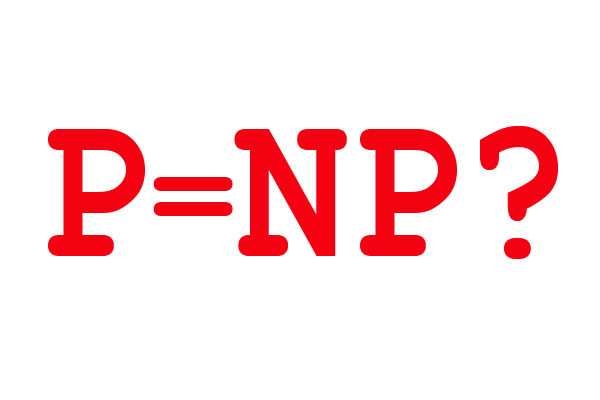
P = NP
New launches split creator fees 50% to the poster and 50% to the launcher. No tripcode is needed to launch; poster claims require verified ownership.
P2P
UPNP

>>110456481
>Phew, that wasn't so bad after all. I thought airplanes were going to fall out of the sky while nuclear missiles started launching. Something like Y2K.
>>110456481
>I thought airplanes were going to fall out of the sky while nuclear missiles started launching.
Don't worry, Math can't do that. It's just made up numbers, after all.
>I thought airplanes were going to fall out of the sky while nuclear missiles started launching.
Don't worry, Math can't do that. It's just made up numbers, after all.
For me, it's P = NP + AI.
>>110456481
nothing ever happens
>>110456624
Penis = No Pussy +AI ?
>>110456481
how much do you get paid to post this garbage constantly on multiple boards?
P≠NP
cope
cope
>>110456855
I think OP thought that if his passwords got exposed hackers wouldn't be able to log in because of the multi-factor auth.
Because he's an idiot.
I think OP thought that if his passwords got exposed hackers wouldn't be able to log in because of the multi-factor auth.
Because he's an idiot.
>>110456481
P vs NP is a well-posed question whose main public justification (crypto) is a category error — crypto needs average-case one-way functions, which P vs NP neither provides nor requires. So the problem's importance is oversold even though the problem is real.
>>110456624
This might actually be a good point, I mean they apparently can't make a secure system to begin with soooooo
>>110456886
Well, that's the expectation.
Would love to see a certificate of that, though, which may ultimately turn into a proof I can understand.
Well, that's the expectation.
Would love to see a certificate of that, though, which may ultimately turn into a proof I can understand.
P=NP doesn't give you a "universal quick solution to every problem". It just means that theoretically there could be an algorithm to find a solution just as fast as you can check its validity in polynomial time. Though it means you still have to find the algorithm by yourself, with absolutely no clue given. And "fast" is conceptual, it doesn't mean it's fast in human terms. 1 billion years can still be polynomial and fall under P=NP
>>110456481
This is high school algebra, people. Set N to one. Done. Where's my money?
>>110459630
>you still have to find the algorithm by yourself
Could I, perhaps, use some super fast computers to speed up to process?
>you still have to find the algorithm by yourself
Could I, perhaps, use some super fast computers to speed up to process?
Computer, say P=NP
>Beep Boop P=NP
Oh my God
>Beep Boop P=NP
Oh my God
>>110459630
I don't think it means "there could be an algorithm". It guarantees that there is an algorithm, doesn't it?
Penis = No Penis
square root of minus one
>>110460933
Mathematically speaking, yes it's guaranteed, But "exists" and "usable" are very different. The algorithm might run in n^1000 time or have constants larger than the number of atoms in the universe, and the proof might not even tell us what it is. There's already a known algorithm (Levin's universal search) that would be polynomial-time if P = NP, and it's hopelessly impractical. So even though mathematically there is one, if it requires impossibly fast hardware, far beyond our wildest dreams.
So the guarantee is real mathematically, but it says nothing about whether we could actually find it ourselves and if it's usable on current and future hardware.
That's why "polynomial" can hide a "simple solution" that's actually completely absurd. An algorithm taking 10^50 * n^2 steps can be mathematically the most efficient (it's in P), but even for n = 1 it needs 10 ^ 50 steps. At a billion billion operations per second, that's around 10^24 years, far longer than the age of the universe.
In Levin's universal search, the constant comes from the length of the unknown fast program. If the program that solves the problem is L bits long, the universal search gives it about a 1/2^L share of the computing time, so it runs about 2^L times slower than that program would on its own. 2^L doesn't depend on the input, so it's "just a constant" but if L is even a few thousand bits, that multiplier dwarfs anything physically achievable.
Mathematically speaking, yes it's guaranteed, But "exists" and "usable" are very different. The algorithm might run in n^1000 time or have constants larger than the number of atoms in the universe, and the proof might not even tell us what it is. There's already a known algorithm (Levin's universal search) that would be polynomial-time if P = NP, and it's hopelessly impractical. So even though mathematically there is one, if it requires impossibly fast hardware, far beyond our wildest dreams.
So the guarantee is real mathematically, but it says nothing about whether we could actually find it ourselves and if it's usable on current and future hardware.
That's why "polynomial" can hide a "simple solution" that's actually completely absurd. An algorithm taking 10^50 * n^2 steps can be mathematically the most efficient (it's in P), but even for n = 1 it needs 10 ^ 50 steps. At a billion billion operations per second, that's around 10^24 years, far longer than the age of the universe.
In Levin's universal search, the constant comes from the length of the unknown fast program. If the program that solves the problem is L bits long, the universal search gives it about a 1/2^L share of the computing time, so it runs about 2^L times slower than that program would on its own. 2^L doesn't depend on the input, so it's "just a constant" but if L is even a few thousand bits, that multiplier dwarfs anything physically achievable.

ICUP
>>110456624
NSA hire this man
NSA hire this man
>>110463449
hello John Gepete
hello John Gepete
>>110456486
Penus to penus
Penus to penus
>>110463449
only good post ITT wasted on an """ironic""" AI shill thread
>>110459647
>Could I, perhaps, use some super fast computers to speed up to process?
Yes after you use P= NP to invent them
>Could I, perhaps, use some super fast computers to speed up to process?
Yes after you use P= NP to invent them
>>110464472
>If you understand big O notation and what polynomial stands for on a technology board it means you're an AI
:)
>If you understand big O notation and what polynomial stands for on a technology board it means you're an AI
:)
>>110456624
post this on linkedin